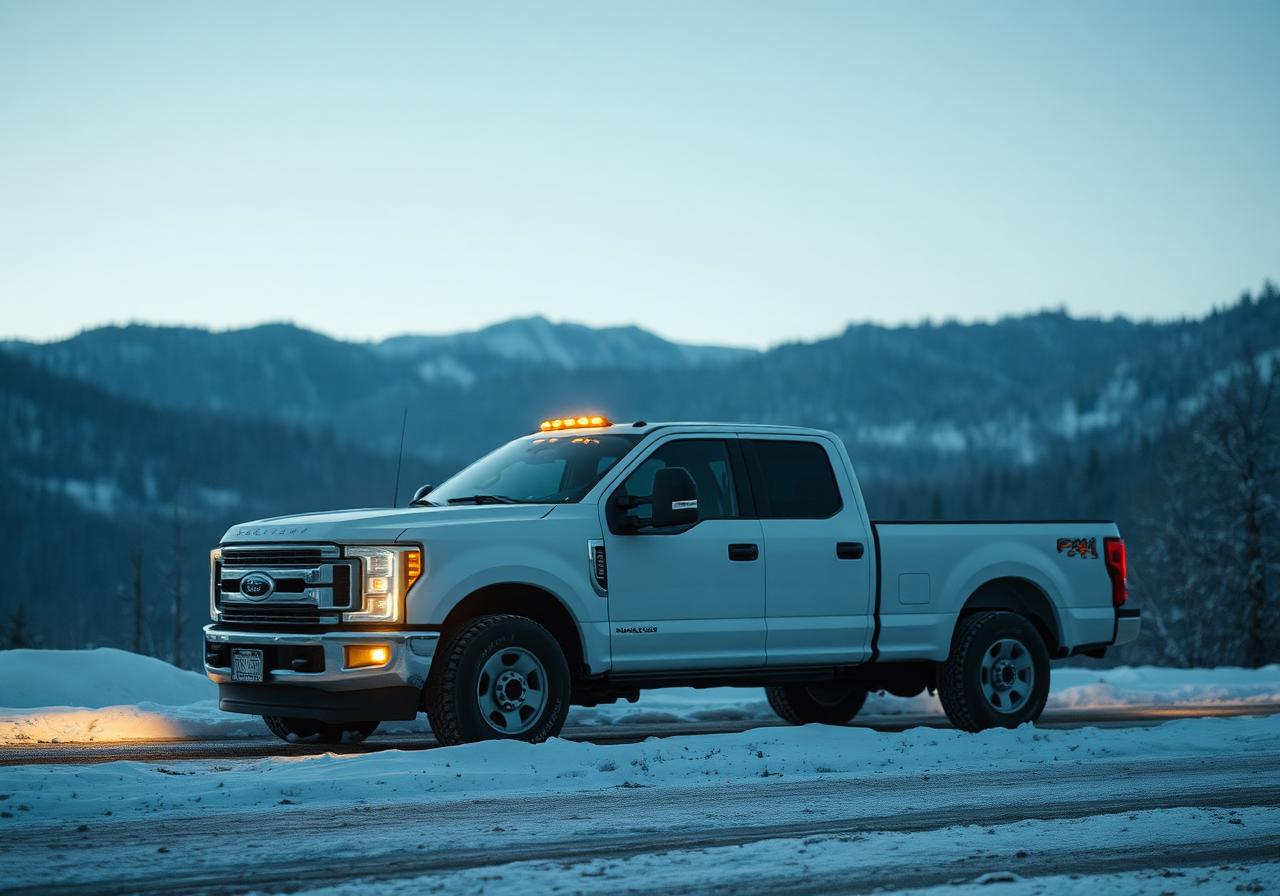
The Central Valley doesn't get a real winter. But routes that touch the Sierra foothills — the I-80 corridor toward Reno, the Highway 50 climb toward South Lake Tahoe — absolutely do. Here's what we check before December.
Cooling system, in reverse
Cooling systems take more abuse in winter than summer for one specific reason: thermal cycling. Hot engine, cold ambient, heater core under load. Coolant freeze point gets tested on every vehicle, hoses get a squeeze test, and the radiator cap gets pressure-checked.
Batteries and charging
Cold cranking amps drop 30–40% at freezing temperatures. A battery that starts fine at 65°F may not start at 25°F. We load-test every battery and replace anything below 75% of its rated CCA.
Tires (the obvious one, but)
Tread depth that's marginal in summer is dangerous in wet or icy conditions. We bump our flagging threshold to 5/32 for any vehicle running mountain routes between November and March.
Wipers, washer fluid, defrost
Easy items that fail when you need them most. Wipers older than 12 months get replaced. Washer reservoir gets winter-blend fluid. Defrost output tested on every vehicle.
— Alejandro Murillo